After all Actors, Goals, Use Cases, User Stories, and Requirements have been documented, we need to explore what data is associated with each workflow. This includes documenting all data information (generic / custom user-defined fields and API Information) for all systems. (CRM, ERP, Third Part Applications/Plugins, Payment Processors)
¶ Step 2 Output:
- Generic Field Information for all workflow data.
- Custom User Defined Field Information for all workflow data.
- Documentation of Existing Custom User Defined Fields
- Documentation of Custom User Defined Fields that will need to be created in order for the Use Case Functionality to be achieved.
¶ Identify and Analyze the Data
Identify all Existing Data Fields, User Defined Fields, and Data Workflows/ Internal Business Processes that are associated with each workflow. Once all have been identified and documented, it is time to analyze the data in order to determine the best possible development implementation for each client deliverable.
¶ Step 3 Outputs:
¶ Integration Dataflow Diagrams
- Each entity (i.e. an Account, User, Order, or Quote) that is mentioned in a Use Case will need an Integration Dataflow Diagram. These diagrams show which Systems and Actors interact with each other, what data is the Systems and Actors are interacting with, and at what points in the workflow each interaction takes place.
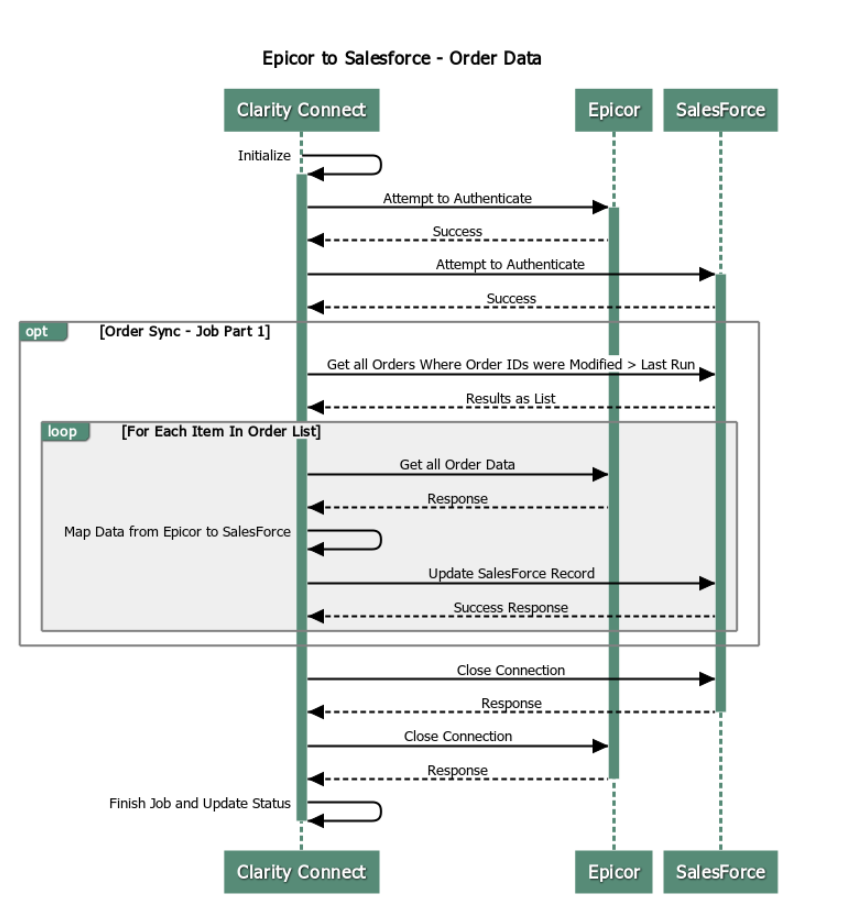
Example: Simple Web Sequence Diagram showing the Order Data Workflow between Epicor and Salesforce
¶ Data Mappings
All Generic and Custom User Defined Fields that are identified as part of a Use Case Workflow need to mapped to their respective fields in whichever system the data is being pulled from/pushed to.
- All Mappings should also include the direction of the sync. (Bidirectional or Unidirectional)
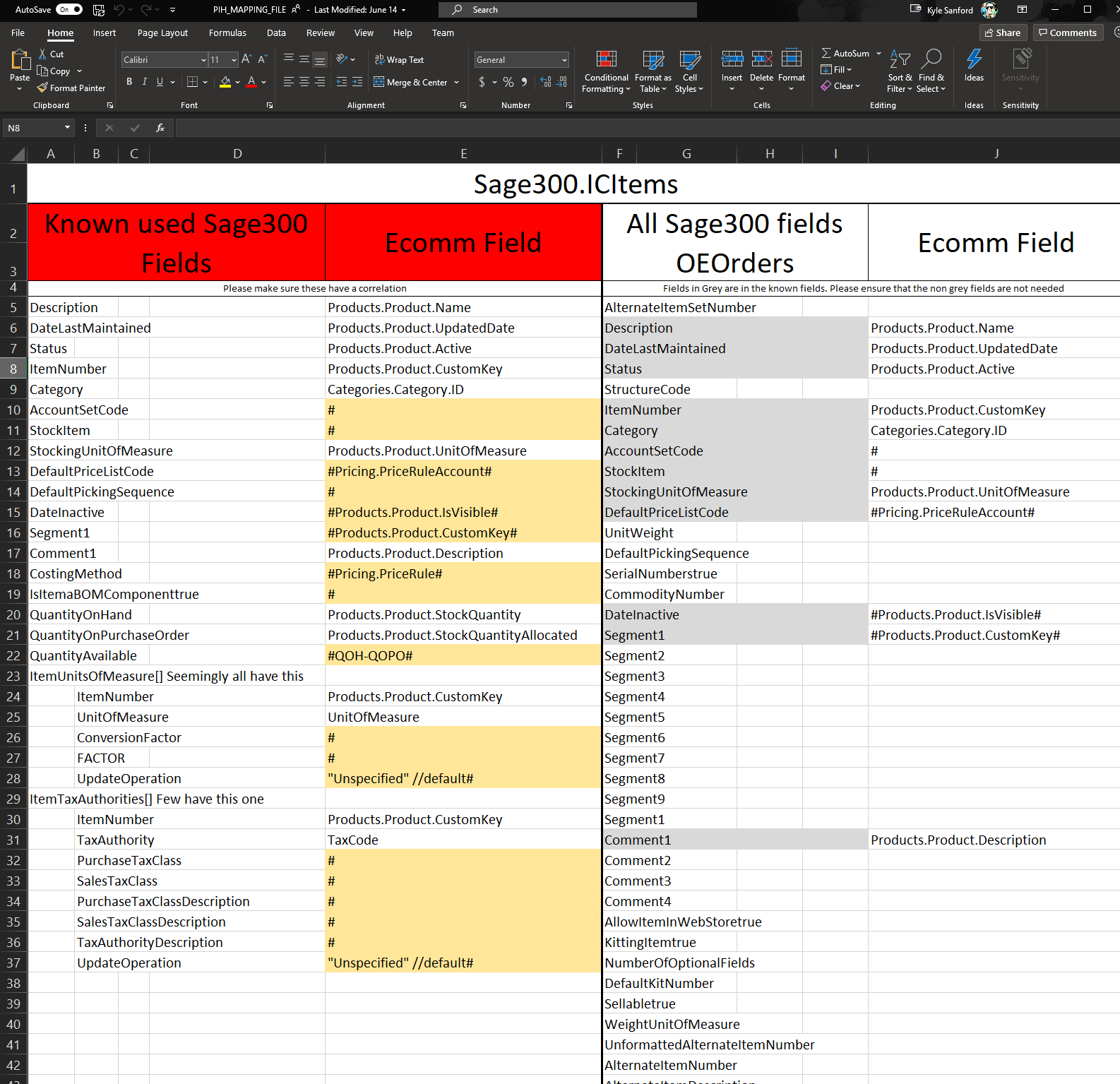
Example: Sage 300 Item Field Mappings for an eCommerce Application\
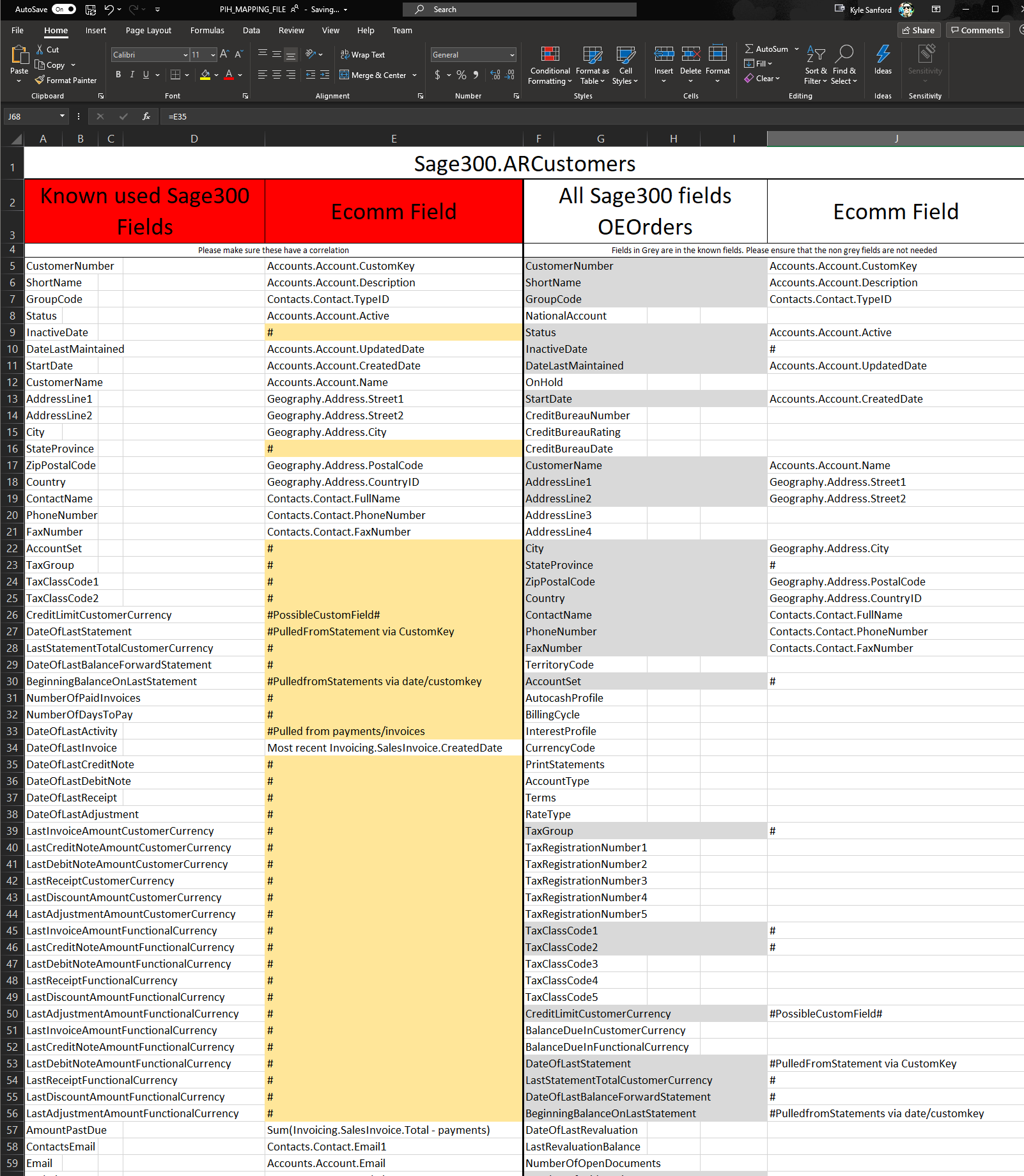
Example: Sage 300 Customer Field Mappings for an eCommerce Application
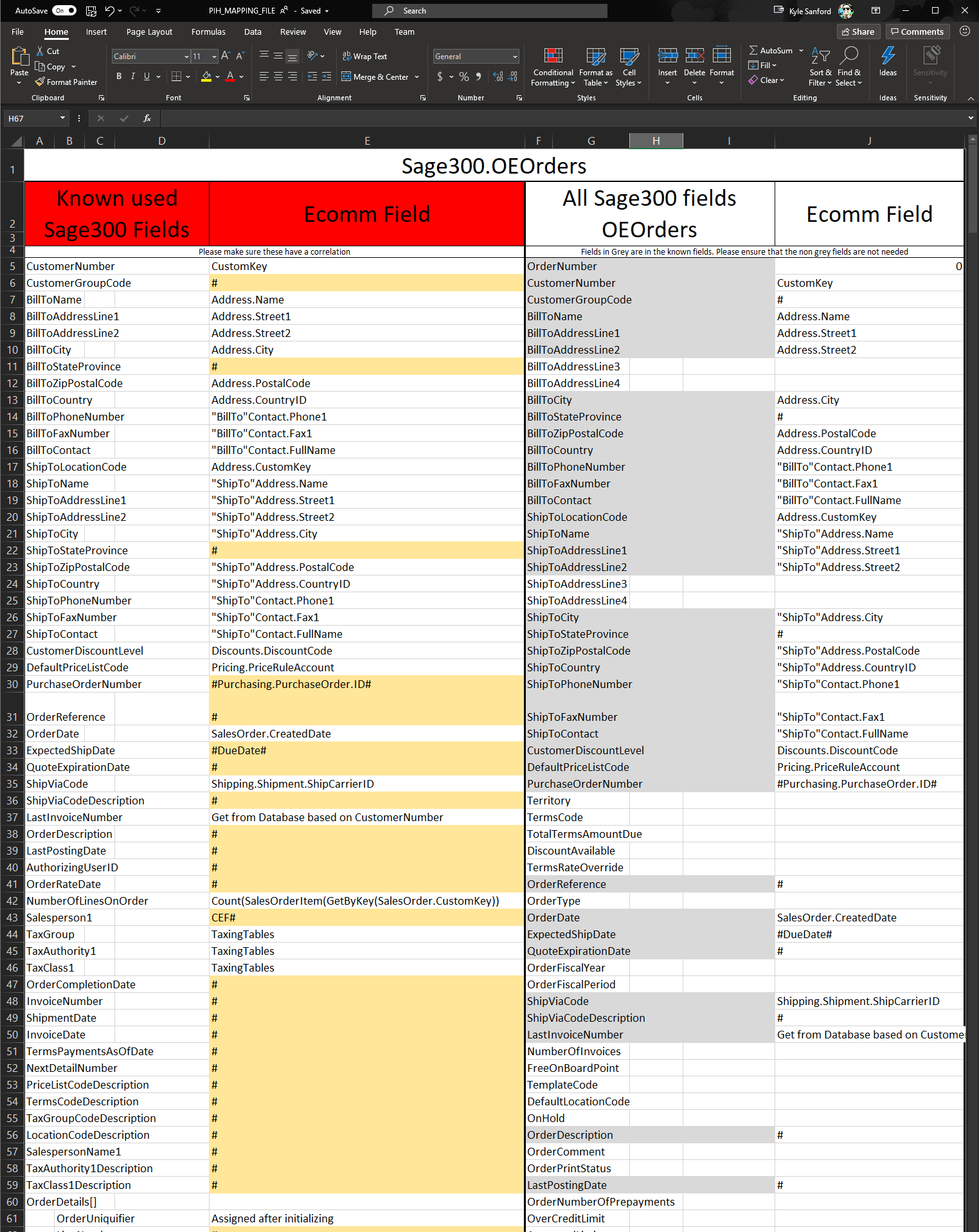
Example: Sage 300 Order Field Mappings for an eCommerce Application